How often should a wax guard be changed
Quick answer
A wax guard typically lasts 4 to 8 weeks with average earwax, and as little as 1 to 2 weeks with very heavy production. The real signal is the device sounding weak or dead rather than a date, and a blocked guard is the commonest reason a hearing aid appears to have failed.
Wax guard interval
Intervals are a rule of thumb rather than a manufacturer schedule. Change a guard when a device sounds weak, whatever the calendar says.
Enter values above to see the answer.
Equipment this answer points to

Wax guards for Signia, original Sivantos part
$8.91An original manufacturer part for Signia miniReceivers, which is worth preferring on a component this small and this precisely fitted.
Best for: Signia wearers.
Check price on Amazon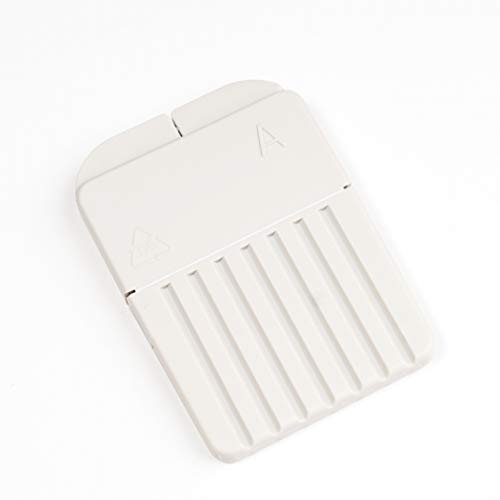
Wax guard filters for Phonak, 5 packs
$9.99The Phonak fitting in a multi-pack, from a dedicated hearing supply seller rather than a general marketplace listing.
Best for: Phonak wearers.
Check price on Amazon
Wax guards for Starkey, 1.5 mm, 32 count
$11.99The Starkey fitting, which is a different diameter again from the Phonak and Oticon ones.
Check before buying: Compatible parts, not made by Starkey.
Best for: Starkey wearers.
Check price on Amazon
Hearing aid cleaning kit, 12 piece
$12.09Brush, wax loop, magnet and vent cleaner in one case, which covers the daily routine for the price of a single pack of batteries.
Best for: The basic kit everyone should have. The magnet alone earns it back the first time a battery is dropped.
Check price on AmazonCommon questions
- How do I know a wax guard is blocked?
- The device sounds weak, muffled or completely dead, and nothing about the battery or the charger explains it. A visible plug confirms it, but a guard can be blocked enough to kill the output while still looking fairly clean, so the sound is the more reliable indicator. Changing one takes under a minute and costs well under a dollar.
- Can I clean a guard instead of replacing it?
- No. A wax guard is designed to be replaced rather than cleaned, and attempting to clear one usually pushes the blockage further in or damages the filter. They come on sticks with a removal tool at one end and a fresh guard at the other, so the change is a single push and pull operation.
- Are wax guards the same across brands?
- No. They are brand specific and frequently model specific, and the diameters differ by fractions of a millimetre. A Phonak guard, an Oticon ProWax MiniFit and a Starkey guard are three different parts. Multi-brand packs exist for fittings that genuinely share a size, but check what you currently use before ordering.
- Should I be worried about producing a lot of earwax?
- Production varies enormously between people and is largely individual physiology, so a high level on its own is not a concern. What is worth raising with a clinician is a sudden change in how much you produce, repeated blockage of the ear canal itself rather than just the device, or a hearing change that a wax removal appointment resolves.
- What happens if I never change it?
- The device gets quieter and eventually stops producing sound, and if the guard fails or is missing, wax reaches the receiver itself. The receiver is the expensive component and that usually means a repair rather than a part. The guard exists precisely to be the cheap thing that fails instead, so letting it do that is the point.
Get the complete hearing gear list
Every item in the starter, everyday and full setups, with running totals, in one printable list. It opens with a hearing evaluation, because that is genuinely the first step. No charge.
One list, no sequence of daily emails, and you can leave at any time.