Open against closed domes
Quick answer
An open dome wins when good low-frequency hearing remains and loss is concentrated in the high frequencies, because it lets natural bass through and feels the least blocked. A closed dome wins when loss extends into the lower frequencies and more amplification is needed without feedback, at the cost of a plugged-up feeling and a boomier own voice. Tulip domes sit between the two, and a power or double dome is usually the last stop before a custom earmould becomes the better answer.
A dome is the small silicone tip on the end of a receiver in canal or thin tube behind the ear hearing aid, and it does two competing jobs at once: it holds the receiver or tube in place in the canal, and it controls how much of the canal stays open to outside sound. More venting lets more natural, unamplified low-frequency sound through and feels less occluded; less venting allows more amplification before feedback starts, and keeps more of the amplified low-frequency sound in the ear rather than letting it leak back out.
Dome style is chosen by how much usable low-frequency hearing remains and by how much gain the device needs to deliver, and it is a trade convention rather than a fixed rule; a fitting is confirmed against a full hearing profile, not picked from a chart alone. Dome sizes and fittings are also manufacturer specific, and a Phonak dome and a ReSound dome of the same nominal size are not interchangeable parts.
The four dome styles
Open domes maximize natural sound and minimize occlusion; closed and power domes trade that away for more usable gain.
| Dome style | Venting | Suits | Tradeoff |
|---|---|---|---|
| Open dome | Maximum | Good low-frequency hearing with loss concentrated in the high frequencies | The most natural own-voice sound and the least occlusion, but the least usable gain before feedback |
| Tulip dome | Moderate | A middle position when open gives too little gain and closed feels blocked | More retention and more gain than open, with some occlusion returning |
| Closed dome | Minimal | Loss that extends into the lower frequencies, where low-frequency sound needs to stay in the ear | More available gain and better low-frequency delivery, at the cost of a blocked feeling and a boomier own voice |
| Power or double dome | Sealed | The most amplification a dome fitting can support before a custom earmould is needed | The most gain and the most occlusion; often the point where a custom mould becomes the better answer |
How dome choice interacts with receiver power
Dome venting and receiver power are chosen together, not separately, because more venting lets more amplified sound leak back out and become feedback before it reaches full volume. As a trade convention, a standard or medium receiver built for mild to moderate loss is usually paired with an open or tulip dome, since the amplification needed is modest enough that an open fitting rarely feeds back. A power or ultra power receiver built for moderately severe to profound loss usually needs a closed or power dome to seal the canal enough to use that much gain without whistling. The actual pairing on any specific device is set by a hearing care provider or the device's own fitting software against a full hearing profile, and the guidance here describes the general pattern rather than a fixed rule for every ear.
When a dome stops being enough
A power or double dome is the last stop before a custom earmould, made from an impression of the individual ear canal, becomes the better answer. That point usually arrives when feedback persists even with the most sealed dome available, when the dome will not stay seated in the canal, or when the fitting calls for more amplification than a dome-based receiver is built to deliver. A custom earmould is a professional fitting step, made and fitted by an audiologist or hearing aid dispenser rather than ordered as a generic replacement part.
Replacement domes by style
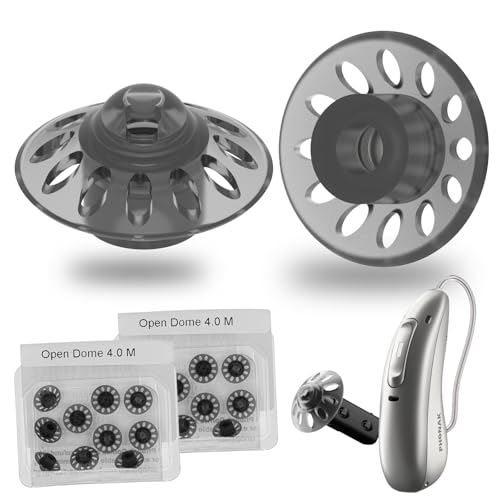
Open domes for Phonak, 9 mm, 20 count
$9.99 Published specsMaximum venting for the most natural own-voice sound, suited to loss concentrated in the high frequencies with good low-frequency hearing remaining.
Check before buying: Compatible parts, not made by Phonak. Dome fittings differ between manufacturers and even between model generations, so check the fitting on the part you are replacing before ordering.
Best for: Phonak Audeo Marvel, Paradise and Lumity wearers with high-frequency loss.
Check price on Amazon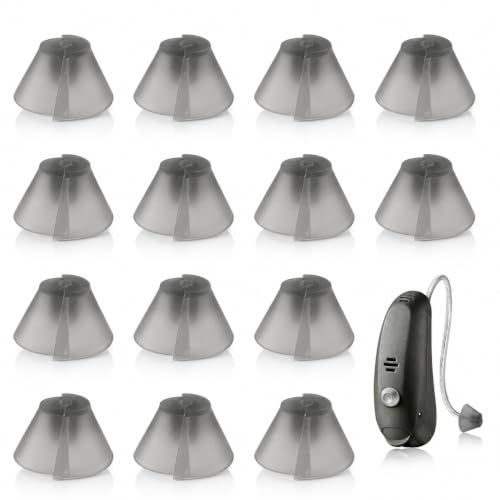
Tulip domes for Resound and Jabra, 14 count
$7.99A middle position between open and closed, for a fitting that needs more gain than an open dome provides without the fully blocked feeling of a closed one.
Check before buying: Compatible parts, not made by GN Resound or Jabra.
Best for: Jabra Enhance and GN Resound wearers who find open domes too thin and closed domes too blocked.
Check price on Amazon
Power domes for Resound, trial pack, 9 count
$9.99The most sealed dome fitting available before a custom earmould, for the most amplification a dome-based receiver can support.
Check before buying: Sealing the canal brings back the blocked feeling and a boomier own voice. If a power dome still is not enough, the next step is usually a custom earmould rather than another dome.
Best for: Trying a closed fitting when an open dome is not giving enough.
Check price on AmazonCommon questions
- How do I know if I need an open or closed dome?
- The general pattern is that good remaining low-frequency hearing with loss concentrated in the highs suits an open dome, while loss extending into the lower frequencies suits a closed dome to keep amplified bass in the ear. The actual choice is confirmed against a full hearing profile by a hearing care provider or a self-fitting device's own software, not picked from a chart alone.
- Can I switch dome styles myself?
- On most self-fitting OTC devices, yes; domes are a routine replaceable part, and trying a different vent level is a normal step if the current fitting feels too blocked or too weak. Dome sizes and fittings are manufacturer specific, so a replacement needs to match the same brand and receiver, and a persistent problem after switching is worth raising with the device's support line.
- Why does my hearing aid whistle or squeal?
- That sound, called feedback, usually means amplified sound is leaking back out of the ear and being picked up by the microphone again, often because the dome is not sealing the canal well enough for the amount of gain in use, is the wrong size, or is not seated properly. Reseating the dome or trying a less vented style is the first thing to check before assuming the device itself has a fault.
- Are domes interchangeable between hearing aid brands?
- No. Dome sizes and fittings are set by each manufacturer, and a dome sized for one brand's receiver will not reliably fit another brand's, even at the same nominal millimeter size. Replacement domes need to be bought for the specific device they are going on, which is why they are sold as brand matched parts rather than one universal size.
- What comes after a power dome stops being enough?
- A custom earmould, made from an impression of the individual ear canal and fitted by a hearing care provider, is the usual next step once a power dome still cannot control feedback or deliver enough gain. That is a professional fitting step rather than a part that can simply be ordered and swapped in at home.
Get the complete hearing gear list
Every item in the starter, everyday and full setups, with running totals, in one printable list. It opens with a hearing evaluation, because that is genuinely the first step. No charge.
One list, no sequence of daily emails, and you can leave at any time.
Last updated 2026-09-17.