Over the counter against prescription hearing aids
Quick answer
An over the counter hearing aid is the right choice for an adult with perceived mild to moderate hearing loss who wants to buy without an exam and either self-fit the device or use bundled remote support. A prescription hearing aid is the right choice for severe or profound loss, for hearing loss in one ear only, for anyone under 18, and for anyone whose hearing has not been evaluated by a professional. Both categories are FDA regulated medical devices; the difference is who each one is cleared for, not which one performs better.
The 2022 FDA rule split the hearing aid market into two regulated categories rather than one. Both an over the counter (OTC) device and a prescription device are medical devices with output limits and labelling requirements, and both are built to compensate for hearing loss rather than simply amplify sound the way a personal sound amplifier does. The real difference the rule draws is about who each category is for and how a person gets one, not about which one is the genuine hearing aid.
That distinction matters because the two paths lead different places. Choosing OTC for a case that actually needs a prescription device delays the right care for a loss OTC cannot address; choosing a full clinical fitting for straightforward perceived mild to moderate loss can mean paying for and waiting on an appointment nobody required. The table below lays out where the line actually sits.
The difference in one table
OTC needs no exam and covers perceived mild to moderate loss in adults; prescription covers everything else, including children.
| OTC hearing aid | Prescription hearing aid | |
|---|---|---|
| Regulated by the FDA | Yes, as a distinct category created in 2022 | Yes, has been throughout |
| Intended for | Adults 18 and over, perceived mild to moderate loss | Any degree of loss, any age |
| Exam or prescription required | No | Yes, evaluated and fitted by a licensed professional |
| Who fits the device | You, through self-fitting software, or a bundled remote support team | A licensed audiologist or hearing aid dispenser |
| Children under 18 | Never appropriate | The only appropriate route |
| Hearing loss in one ear only | Not appropriate; needs evaluation first | The right category |
| Sold | Directly to the public, in stores and online | Through a licensed clinic or dispenser |
When OTC is the right call
OTC fits best when the loss is perceived as mild to moderate, the buyer is an adult, hearing has not obviously changed suddenly or in one ear only, and the buyer is comfortable either self-fitting through an app or working with a bundled remote support team rather than an in-person clinic. A low commitment first purchase, such as Audien Atom One, is a reasonable way to find out whether amplification helps before spending more, and moving up the OTC price range mainly buys more processing, more connectivity, and in some cases a remote audiologist, rather than a different regulatory category.
OTC also fits a reader who has already been evaluated by a professional and told the loss is mild to moderate, and who simply wants to buy the device itself without a repeat clinic visit for a straightforward case.
When prescription is the right call
Prescription is the only appropriate route in four situations, regardless of budget or preference: hearing loss in one ear only, since a one-sided change needs a professional evaluation before any device is chosen; hearing loss in anyone under 18, since OTC devices are never appropriate for a minor; loss serious enough to be moderately severe, severe, or profound, since most OTC devices are built and labelled for the mild to moderate range; and any case where hearing has not been evaluated at all, since a self-perceived mild to moderate loss is not the same thing as a tested one. A licensed audiologist or hearing aid dispenser also catches conditions a hearing aid alone cannot address, which is a real advantage a self-fitting purchase does not have.
Where to start if OTC fits your case
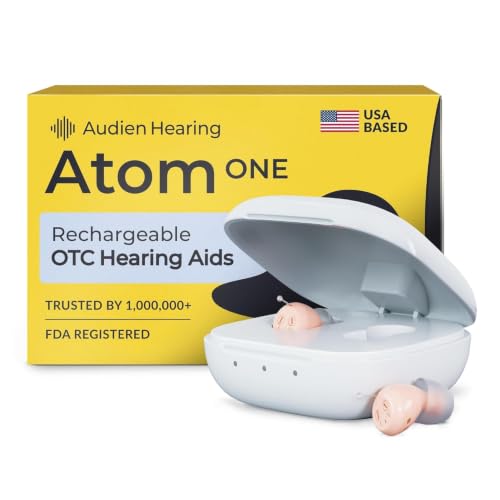
Audien Atom One
$88.20FDA regulated OTC hearing aid
The lowest cost branded OTC device in this catalog, useful as a first, low commitment way to find out whether amplification helps before spending more.
Check before buying: At this price the device is a basic amplifying aid with minimal adjustment. If a fitting to your own hearing pattern matters, this tier does not do it and a self-fitting device does.
Best for: Someone who wants to find out whether amplification helps at all before spending more.
Check price on Amazon
MDHearing VOLT MAX 2
$597.00FDA regulated OTC hearing aid
Published specsA self-fitting behind the ear device from one of the longest established direct to consumer hearing aid companies in the United States, for a buyer who wants an established name with phone support.
Best for: A buyer who wants a behind the ear device from an established American brand with phone support.
Check price on Amazon
Jabra Enhance Select 700
$1,995.00FDA regulated OTC hearing aid
Published specsSold with bundled remote audiology support rather than as hardware alone, for a buyer who wants clinic style follow up without an in-person appointment.
Check before buying: The listed price spans a wide range depending on the support package and configuration chosen at checkout. Confirm what level of audiology support is included before ordering, because that inclusion is most of what distinguishes this from a cheaper device.
Best for: Someone who wants clinic style follow up and professional fine tuning without in person appointments, and who has budgeted for a four figure purchase.
Check price on AmazonCommon questions
- Can I just buy an OTC hearing aid without seeing anyone first?
- Yes, for an adult whose hearing loss is perceived as mild to moderate. The 2022 FDA rule created the OTC category specifically so a device could be bought and self-fitted, or fitted with bundled remote support, without a medical exam or a prescription. That freedom only covers the perceived mild to moderate range in adults; it does not extend to children or to more severe loss.
- What happens if I buy OTC and later learn I need a prescription device?
- An OTC device that is not helping is a signal worth acting on rather than pushing through. A hearing evaluation from a licensed audiologist can determine whether the loss is outside the mild to moderate range OTC devices are built for, in which case a prescription device, fitted and programmed for that specific loss, is the appropriate next step.
- Is a prescription hearing aid always better than an OTC one?
- Not for the case OTC is built for. A prescription device is the right choice for severe or profound loss, one-sided loss, or anyone under 18, situations OTC is not intended to cover. For perceived mild to moderate loss in an adult, both categories are regulated medical devices, and the meaningful differences are fitting method and support, not which one performs better.
- Can a child use an OTC hearing aid?
- No. OTC hearing aids are intended for adults 18 and over. A child of any age with suspected hearing loss needs a full evaluation and a prescription device fitted by a paediatric audiologist, and OTC is not an appropriate substitute for that process at any price, regardless of how mild the loss appears to a parent.
- Does OTC mean the device is not FDA regulated?
- No, OTC hearing aids are FDA regulated medical devices, created as their own category by the 2022 rule, with output limits and labelling requirements like a prescription device has. OTC changes who a device is cleared for and how it reaches a buyer; it does not remove the device from FDA oversight the way an unregulated personal sound amplifier is.
Get the complete hearing gear list
Every item in the starter, everyday and full setups, with running totals, in one printable list. It opens with a hearing evaluation, because that is genuinely the first step. No charge.
One list, no sequence of daily emails, and you can leave at any time.
Last updated 2026-09-17.